本地部署 ChatGLM2-6B【保姆级教程】:从零搭建你的中英双语大模型对话助手
面向希望在本机可用的读者,从零梳理 ChatGLM2-6B 的硬件/显存要求、环境与依赖、权重下载、推理自检与最简单的流式对话 Demo,并顺带整理常见问题与轻量化思路。
前言
ChatGLM2-6B 是清华大学开源的、在中英双语上表现卓越的对话模型。它不仅性能强劲,更重要的是它对硬件非常友好,通过 4-bit 量化技术,我们甚至可以在一张只有 6GB 显存 的家用显卡(如 RTX 3060)上流畅运行。今天我们就来手把手完成它的本地部署,并写一个属于自己的对话 Demo。
一、 硬件与环境准备
在开始之前,请确认你的机器满足以下要求:
- 显卡:建议显存 ≥ 6GB (INT4模式) 或 ≥ 14GB (FP16模式)。
- 操作系统:Windows (建议使用 WSL2) 或 Linux (Ubuntu)。
- 开发工具:已安装 Anaconda 或 Miniconda。
根据你的 CUDA 版本安装 PyTorch,并安装 Transformers 等核心库:
# 安装 PyTorch (以 CUDA 11.8 为例)
pip install torch torchvision torchaudio --index-url https://download.pytorch.org/whl/cu118
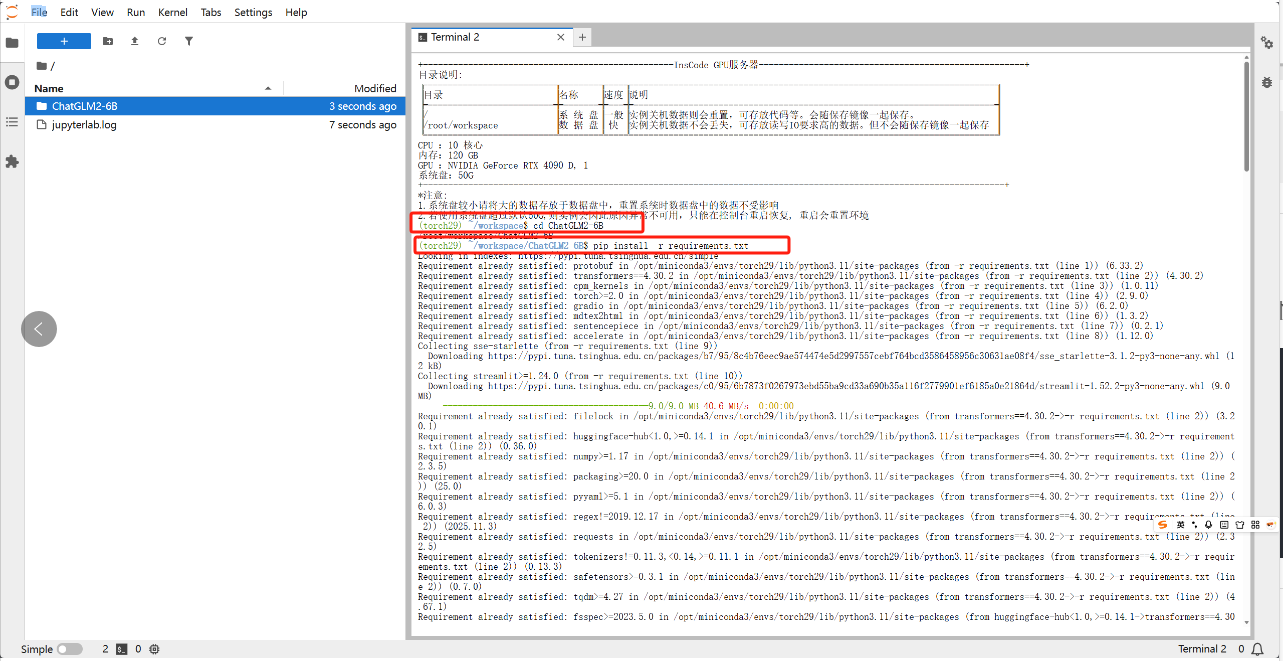
如果是直接选用配置好Pytorch的服务器来做的话就可以跳过上一步,进入下一步。
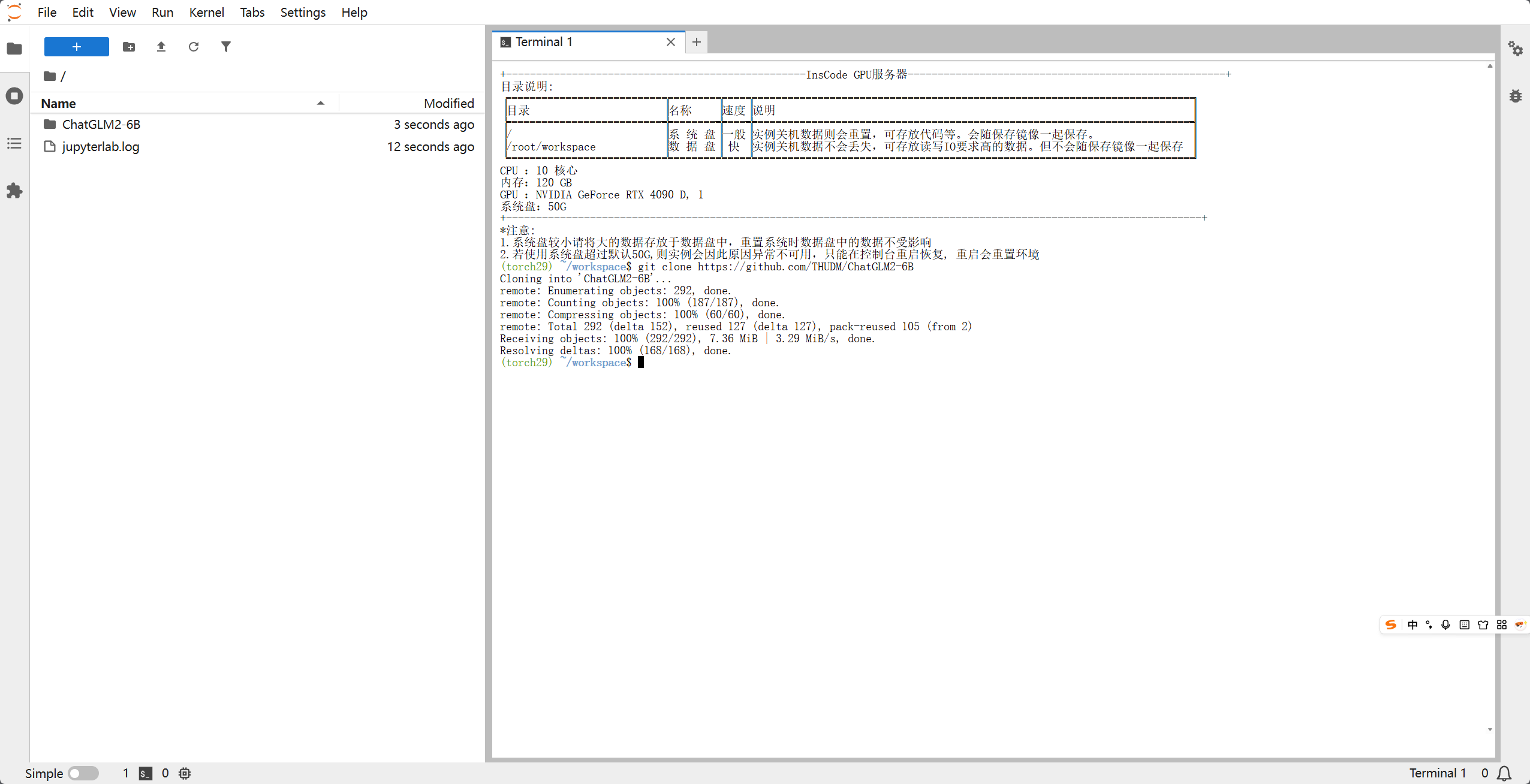
# 克隆代码库并安装依赖
git clone https://github.com/THUDM/ChatGLM2-6B
cd ChatGLM2-6B
pip install -r requirements.txt
二、 下载模型权重
由于模型权重文件较大(约 12GB),国内用户推荐使用 ModelScope (魔搭社区) 下载,速度更快:
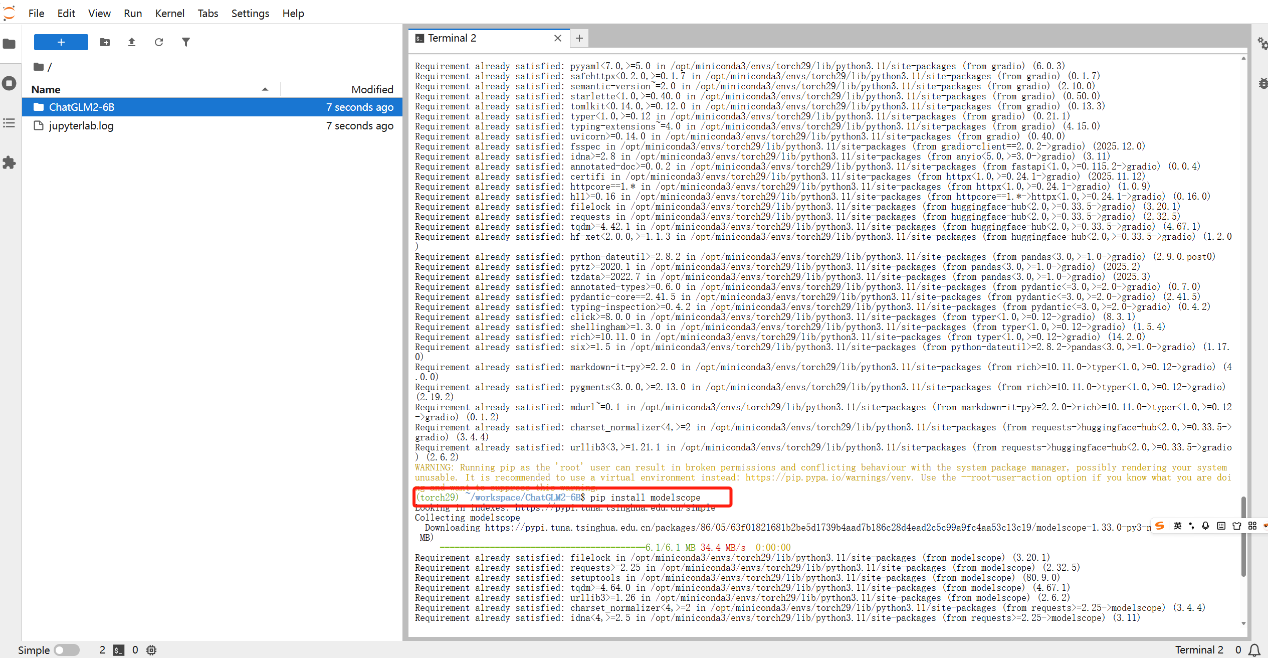
# 安装 modelscope
pip install modelscope
python -c "from modelscope import snapshot_download; snapshot_download('ZhipuAl/chatglm2-6b', cache dir='./')"
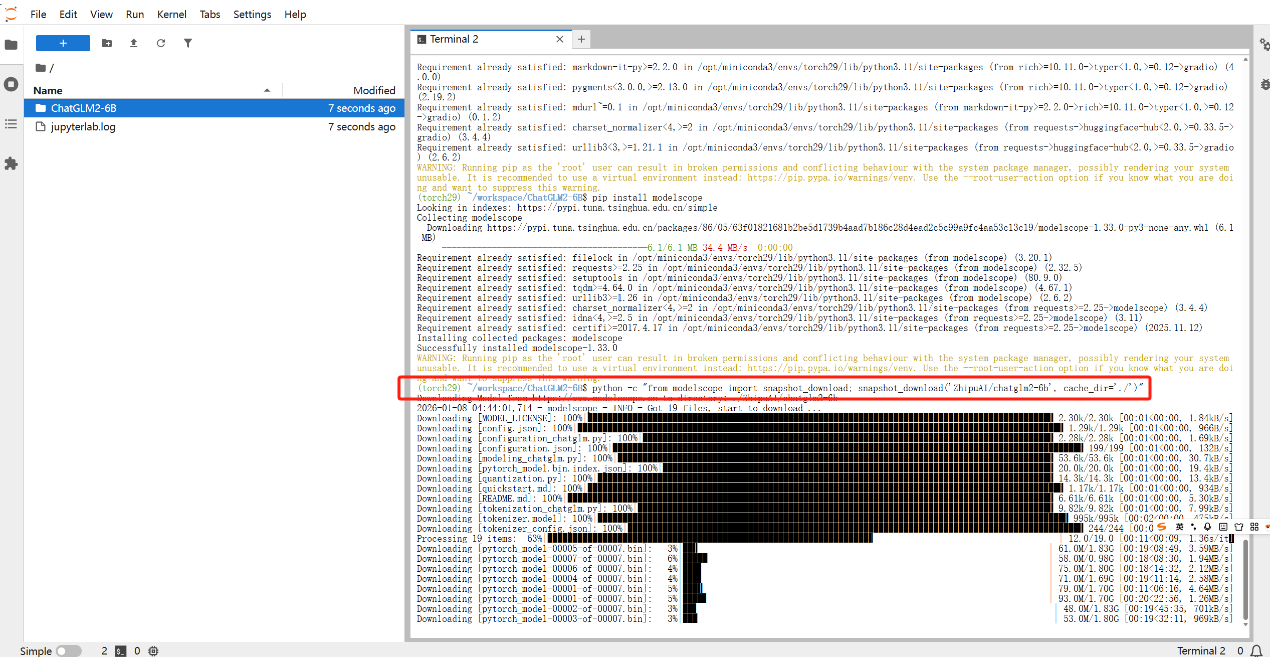
下载过程相对来说长一点,根据网络情况浮动,大约需要二十分钟左右
三、 测试
创建python输入以下代码:
from transformers import AutoTokenizer, AutoModel
import torch

# 1. 模型路径(如果是当前目录,直接填文件夹名)
model_path = "ZhipuAI/chatglm2-6b"

# 2. 加载 Tokenizer
tokenizer = AutoTokenizer.from_pretrained(model_path, trust_remote_code=True)

# 3. 加载模型(根据显存选择一种)

# 方案 A:显存 > 13G (FP16)
model = AutoModel.from_pretrained(model_path, trust_remote_code=True).cuda()

# 方案 B:显存 6G-8G (INT4 量化 - 最常用)
# model = AutoModel.from_pretrained(model_path, trust_remote_code=True).quantize(4).cuda()

# 方案 C:无显卡 (CPU 模式)
# model = AutoModel.from_pretrained(model_path, trust_remote_code=True).float()

model = model.eval()

# 4. 开始对话
response, history = model.chat(tokenizer, "你好,请介绍一下你自己", history=[])
print(response)
并保存为test.py
在终端中执行:
python my_chat.py
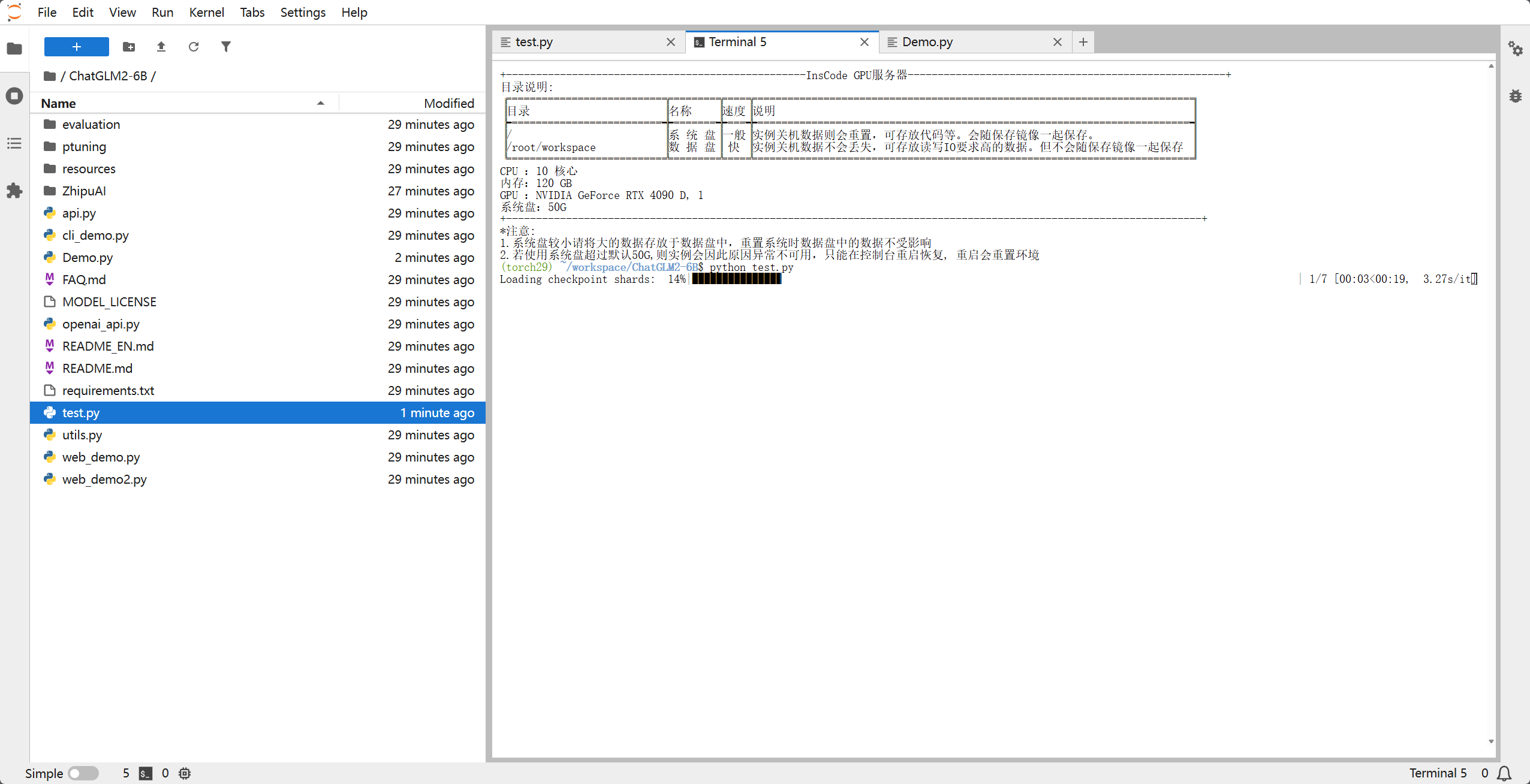
出现以下界面大概率就是可以的了,这个进度条是正在加载权重文件,每次重新运行程序的时候需要加载
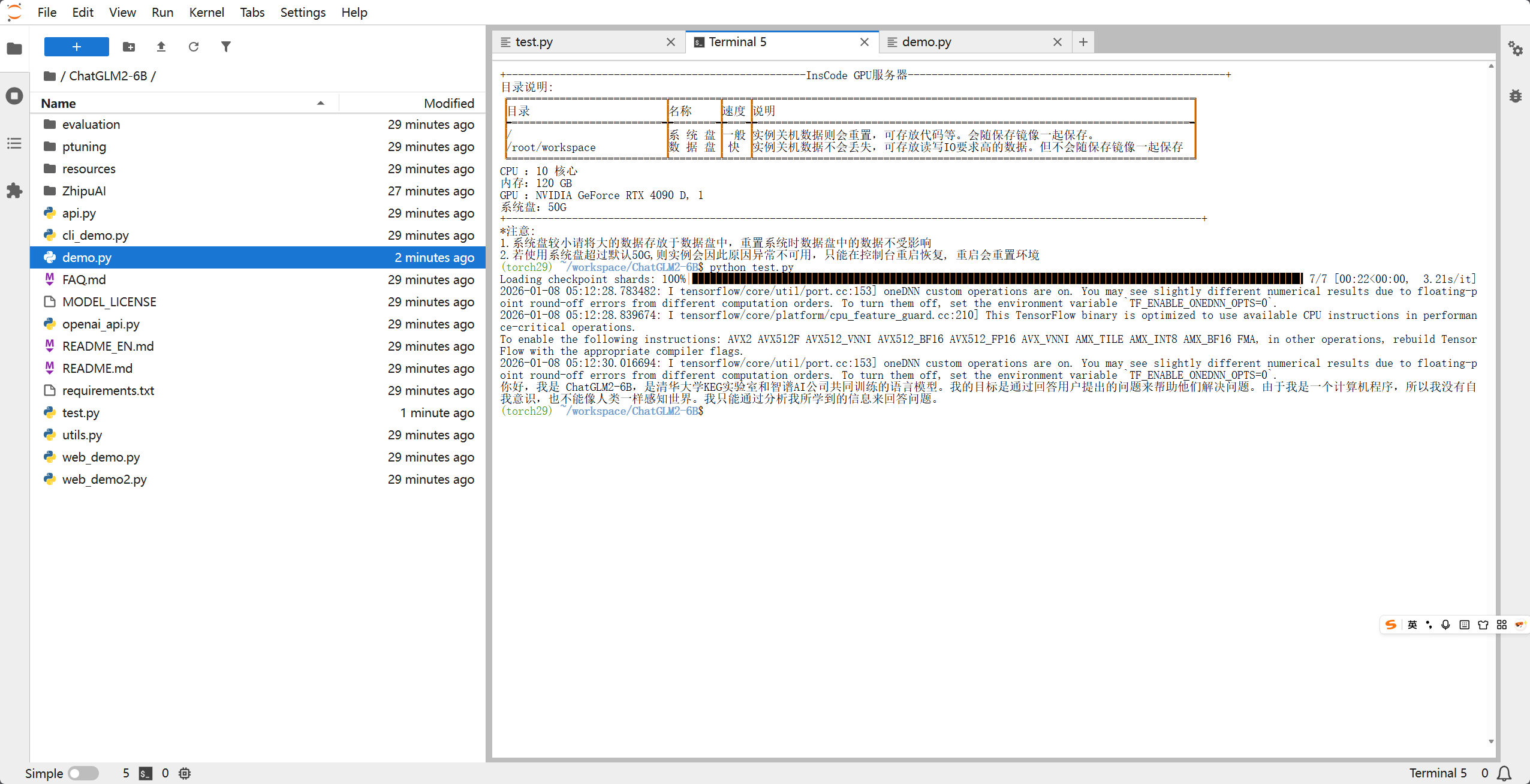
出现以下界面,也就是AI给的答复,那就是ok了的,这是对我们程序里面的那句话 你好,请介绍一下你自己 的答复
三、 编写对话 Demo 程序
ChatGLM2本身有提供web程序,但是由于部分服务器并没有分配公网IP,并且为了不依赖复杂的 Web 界面,我们直接写一个高效的 终端流式对话程序。流式对话可以让模型像“打字机”一样实时输出结果,体验极佳。
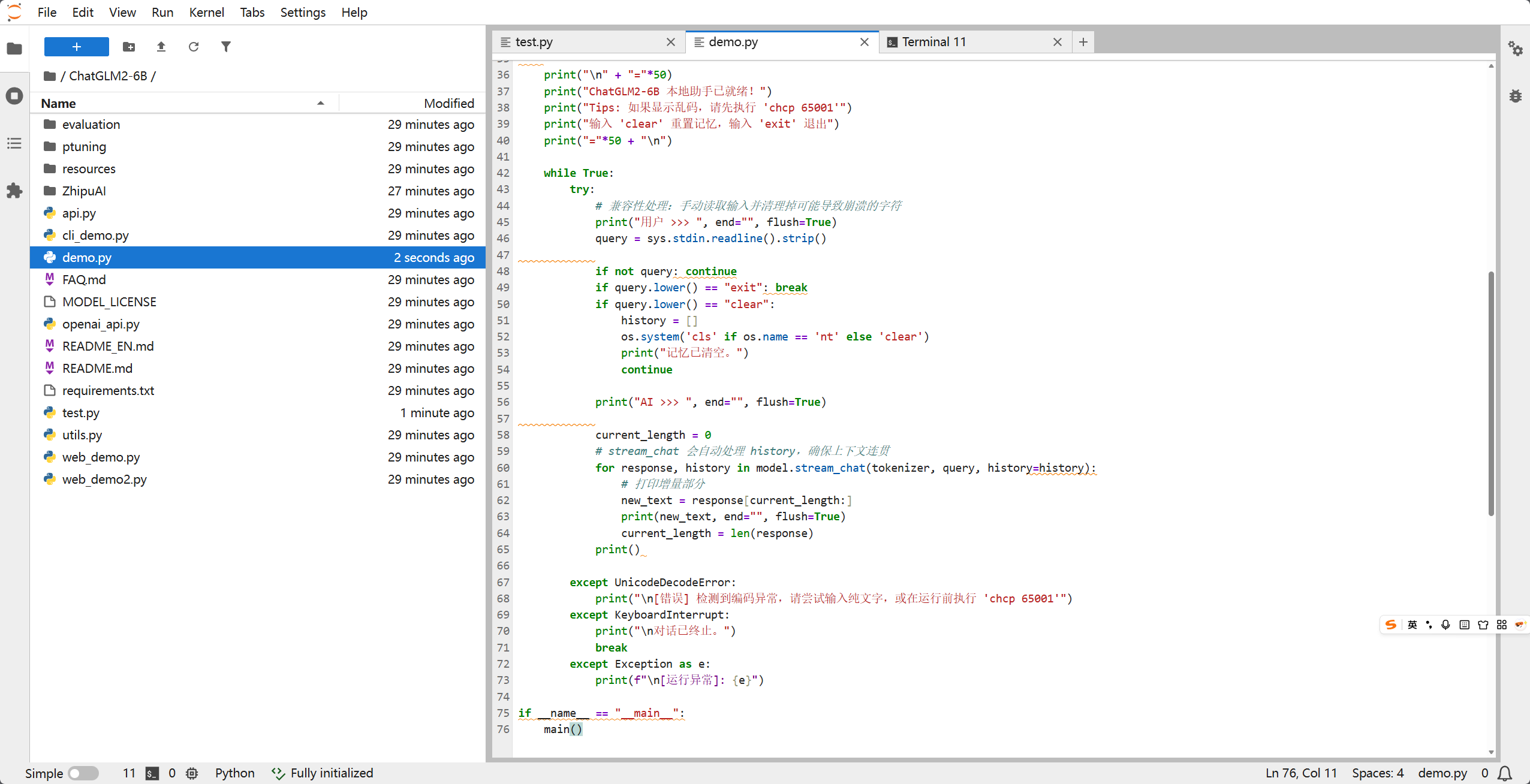
新建文件 demo.py,粘贴以下代码:
import os
import sys
import torch
import warnings
from transformers import AutoTokenizer, AutoModel, logging

# ================= 1. 环境与日志优化 =================
os.environ['TF_CPP_MIN_LOG_LEVEL'] = '3'
os.environ['TF_ENABLE_ONEDNN_OPTS'] = '0'
logging.set_verbosity_error()
warnings.filterwarnings("ignore")

# 强制 Python 的标准输入输出使用 UTF-8 编码,防止 Windows 报错
if sys.platform == "win32":
    import io
    sys.stdout = io.TextIOWrapper(sys.stdout.buffer, encoding='utf-8')
    sys.stdin = io.TextIOWrapper(sys.stdin.buffer, encoding='utf-8')

# ================= 2. 加载模型 =================
model_path = "ZhipuAI/chatglm2-6b"
print("正在启动 AI 引擎,请稍候...", flush=True)

try:
    tokenizer = AutoTokenizer.from_pretrained(model_path, trust_remote_code=True)
    model = AutoModel.from_pretrained(model_path, trust_remote_code=True).quantize(4).cuda()
    model = model.eval()
except Exception as e:
    print(f"模型加载失败,请检查显存或路径: {e}")
    sys.exit(1)

# ================= 3. 对话逻辑 =================
def main():
    history = []
    os.system('cls' if os.name == 'nt' else 'clear')

    print("\n" + "="*50)
    print("ChatGLM2-6B 本地助手已就绪!")
    print("Tips: 如果显示乱码,请先执行 'chcp 65001'")
    print("输入 'clear' 重置记忆,输入 'exit' 退出")
    print("="*50 + "\n")

    while True:
        try:
            # 兼容性处理:手动读取输入并清理掉可能导致崩溃的字符
            print("用户 >>> ", end="", flush=True)
            query = sys.stdin.readline().strip()

            if not query: continue
            if query.lower() == "exit": break
            if query.lower() == "clear":
                history = []
                os.system('cls' if os.name == 'nt' else 'clear')
                print("记忆已清空。")
                continue

            print("AI >>> ", end="", flush=True)

            current_length = 0
            # stream_chat 会自动处理 history,确保上下文连贯
            for response, history in model.stream_chat(tokenizer, query, history=history):
                # 打印增量部分
                new_text = response[current_length:]
                print(new_text, end="", flush=True)
                current_length = len(response)
            print()

        except UnicodeDecodeError:
            print("\n[错误] 检测到编码异常,请尝试输入纯文字,或在运行前执行 'chcp 65001'")
        except KeyboardInterrupt:
            print("\n对话已终止。")
            break
        except Exception as e:
            print(f"\n[运行异常]: {e}")

if __name__ == "__main__":
    main()
四、 运行与对话
在终端中执行:
python my_chat.py
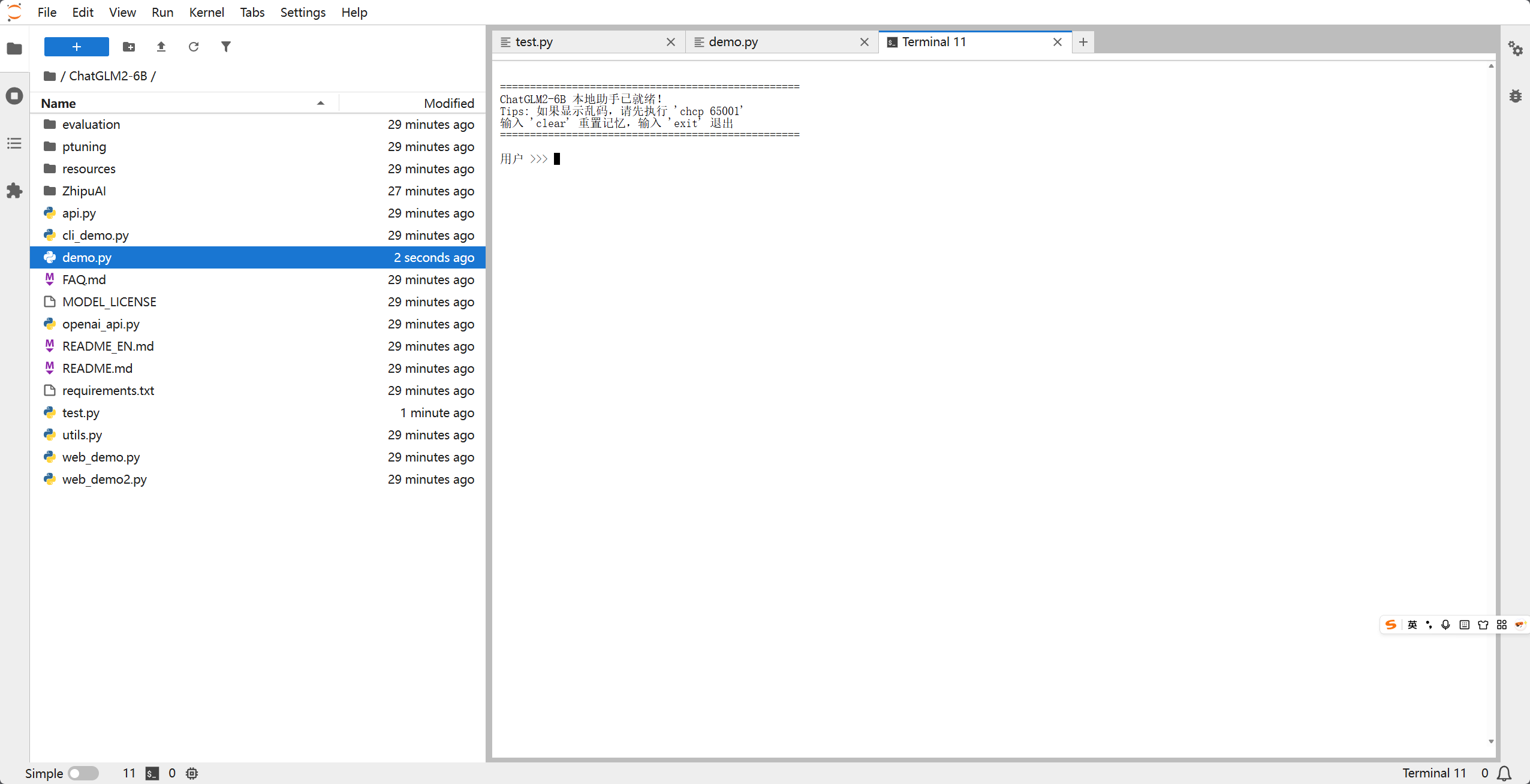
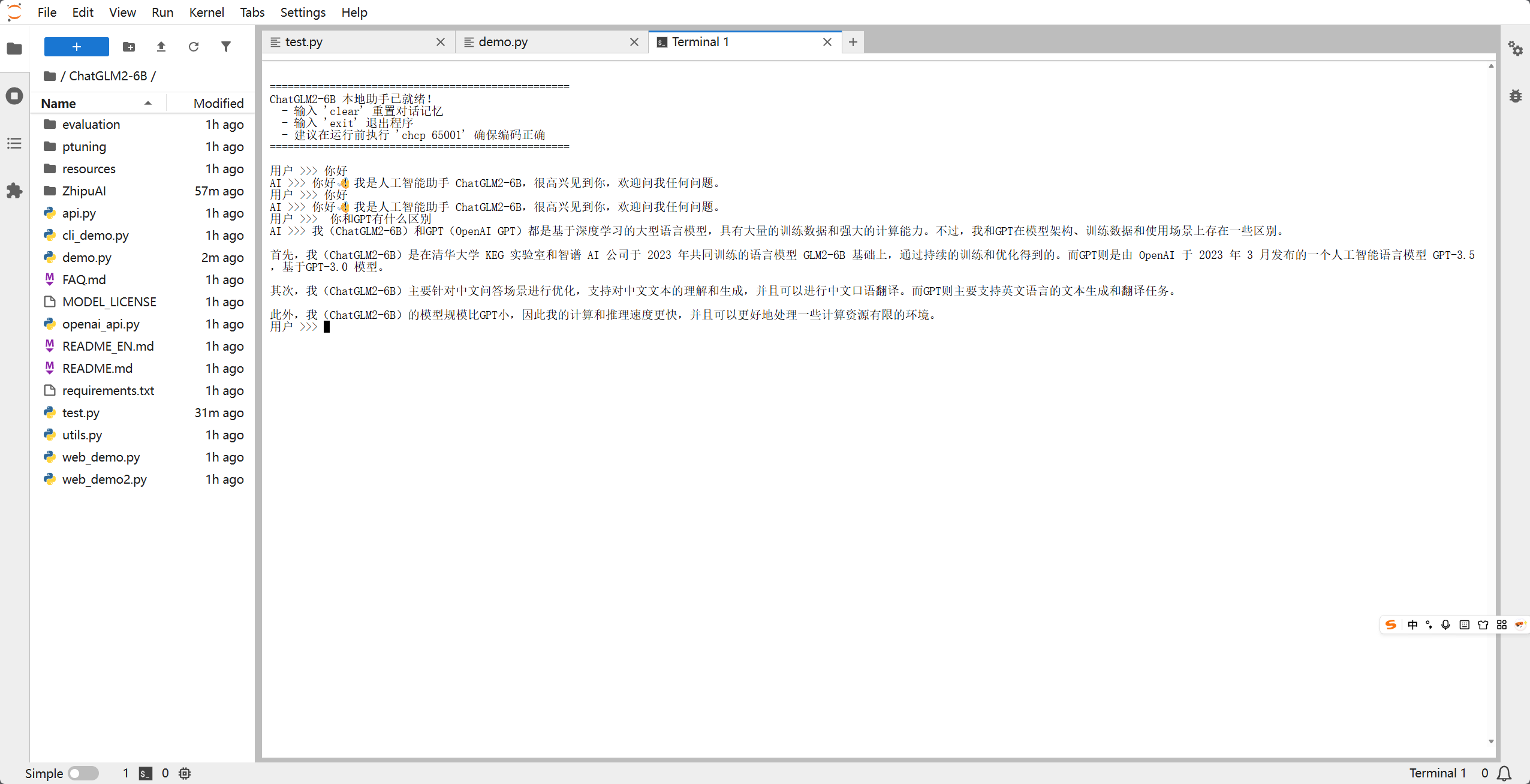
当看到 ChatGLM2-6B 本地助手已就绪! 后,你就可以开始使用它了!
对话示例:
五、 常见坑点与优化
- 显存溢出 (OOM):如果你的显存只有 6G-8G,必须使用
.quantize(4)。如果没有显卡,只能用 CPU 运行(加.float()),但响应时间可能长达数分钟。 - 多轮对话变慢:随着对话轮数增加,
history列表会变长,占用更多内存。建议每隔一段时间输入clear重置。 - Tokenizer 警告:第一次运行如果看到“Migrating old cache”,请耐心等待,这是 Transformers 库在升级缓存结构。
结语
ChatGLM2-6B 是目前个人开发者最值得尝试的模型之一。通过本文的部署,你已经在本地拥有了一个不联网、保护隐私且完全可控的 AI 助手。接下来,你可以尝试接入你的知识库(RAG)或进行 LoRA 微调!
如果你觉得这篇文章有帮助,请点赞并收藏,欢迎在评论区讨论你遇到的问题!
本地部署 ChatGLM2-6B【保姆級教程】:從零搭建你的中英雙語大模型對話助手
从零整理在本機可用的 ChatGLM2-6B:硬體與視訊記憶體評估、環境與套件、權重下載、推理自檢以及最精簡的串流對話程式,並附上常見錯誤與縮載技巧。
來源:https://blog.csdn.net/2403_87969572/article/details/156704235
抓取時間(ISO本地):2026-05-18 05:17:29
文章目錄
前言
ChatGLM2-6B 是清華大學開源的、在中英雙語上表現卓越的對話模型。它不僅效能強勁,更重要的是它對硬體非常友好,透過 4-bit 量化技術,我們甚至可以在一張只有 6GB 視訊記憶體 的家用顯示卡(如 RTX 3060)上流暢執行。今天我們就來手把手完成它的本地部署,並寫一個屬於自己的對話 Demo。
一、 硬體與環境準備
在開始之前,請確認你的機器滿足以下要求:
- 顯示卡:建議視訊記憶體 ≥ 6GB (INT4模式) 或 ≥ 14GB (FP16模式)。
- 作業系統:Windows (建議使用 WSL2) 或 Linux (Ubuntu)。
- 開發工具:已安裝 Anaconda 或 Miniconda。
根據你的 CUDA 版本安裝 PyTorch,並安裝 Transformers 等核心庫:
# 安裝 PyTorch (以 CUDA 11.8 為例)
pip install torch torchvision torchaudio --index-url https://download.pytorch.org/whl/cu118
如果是直接選用配置好Pytorch的伺服器來做的話就可以跳過上一步,進入下一步。
# 克隆程式碼庫並安裝依賴
git clone https://github.com/THUDM/ChatGLM2-6B
cd ChatGLM2-6B
pip install -r requirements.txt
二、 下載模型權重
由於模型權重檔案較大(約 12GB),國內使用者推薦使用 ModelScope (魔搭社群) 下載,速度更快:
# 安裝 modelscope
pip install modelscope
python -c "from modelscope import snapshot_download; snapshot_download('ZhipuAl/chatglm2-6b', cache dir='./')"
下載過程相對來說長一點,根據網路情況浮動,大約需要二十分鐘左右
三、 測試
建立python輸入以下程式碼:
from transformers import AutoTokenizer, AutoModel
import torch

# 1. 模型路徑(如果是當前目錄,直接填資料夾名)
model_path = "ZhipuAI/chatglm2-6b"

# 2. 載入 Tokenizer
tokenizer = AutoTokenizer.from_pretrained(model_path, trust_remote_code=True)

# 3. 載入模型(根據視訊記憶體選擇一種)

# 方案 A:視訊記憶體 > 13G (FP16)
model = AutoModel.from_pretrained(model_path, trust_remote_code=True).cuda()

# 方案 B:視訊記憶體 6G-8G (INT4 量化 - 最常用)
# model = AutoModel.from_pretrained(model_path, trust_remote_code=True).quantize(4).cuda()

# 方案 C:無顯示卡 (CPU 模式)
# model = AutoModel.from_pretrained(model_path, trust_remote_code=True).float()

model = model.eval()

# 4. 開始對話
response, history = model.chat(tokenizer, "你好,請介紹一下你自己", history=[])
print(response)
並儲存為test.py
在終端中執行:
python my_chat.py
出現以下介面大機率就是可以的了,這個進度條是正在載入權重檔案,每次重新執行程式的時候需要載入
出現以下介面,也就是AI給的答覆,那就是ok了的,這是對我們程式裡面的那句話 你好,請介紹一下你自己 的答覆
三、 編寫對話 Demo 程式
ChatGLM2本身有提供web程式,但是由於部分伺服器並沒有分配公網IP,並且為了不依賴複雜的 Web 介面,我們直接寫一個高效的 終端流式對話程式。流式對話可以讓模型像“打字機”一樣實時輸出結果,體驗極佳。
新建檔案 demo.py,貼上以下程式碼:
import os
import sys
import torch
import warnings
from transformers import AutoTokenizer, AutoModel, logging

# ================= 1. 環境與日誌最佳化 =================
os.environ['TF_CPP_MIN_LOG_LEVEL'] = '3'
os.environ['TF_ENABLE_ONEDNN_OPTS'] = '0'
logging.set_verbosity_error()
warnings.filterwarnings("ignore")

# 強制 Python 的標準輸入輸出使用 UTF-8 編碼,防止 Windows 報錯
if sys.platform == "win32":
    import io
    sys.stdout = io.TextIOWrapper(sys.stdout.buffer, encoding='utf-8')
    sys.stdin = io.TextIOWrapper(sys.stdin.buffer, encoding='utf-8')

# ================= 2. 載入模型 =================
model_path = "ZhipuAI/chatglm2-6b"
print("正在啟動 AI 引擎,請稍候...", flush=True)

try:
    tokenizer = AutoTokenizer.from_pretrained(model_path, trust_remote_code=True)
    model = AutoModel.from_pretrained(model_path, trust_remote_code=True).quantize(4).cuda()
    model = model.eval()
except Exception as e:
    print(f"模型載入失敗,請檢查視訊記憶體或路徑: {e}")
    sys.exit(1)

# ================= 3. 對話邏輯 =================
def main():
    history = []
    os.system('cls' if os.name == 'nt' else 'clear')

    print("\n" + "="*50)
    print("ChatGLM2-6B 本地助手已就緒!")
    print("Tips: 如果顯示亂碼,請先執行 'chcp 65001'")
    print("輸入 'clear' 重置記憶,輸入 'exit' 退出")
    print("="*50 + "\n")

    while True:
        try:
            # 相容性處理:手動讀取輸入並清理掉可能導致崩潰的字元
            print("使用者 >>> ", end="", flush=True)
            query = sys.stdin.readline().strip()

            if not query: continue
            if query.lower() == "exit": break
            if query.lower() == "clear":
                history = []
                os.system('cls' if os.name == 'nt' else 'clear')
                print("記憶已清空。")
                continue

            print("AI >>> ", end="", flush=True)

            current_length = 0
            # stream_chat 會自動處理 history,確保上下文連貫
            for response, history in model.stream_chat(tokenizer, query, history=history):
                # 列印增量部分
                new_text = response[current_length:]
                print(new_text, end="", flush=True)
                current_length = len(response)
            print()

        except UnicodeDecodeError:
            print("\n[錯誤] 檢測到編碼異常,請嘗試輸入純文字,或在執行前執行 'chcp 65001'")
        except KeyboardInterrupt:
            print("\n對話已終止。")
            break
        except Exception as e:
            print(f"\n[執行異常]: {e}")

if __name__ == "__main__":
    main()
四、 執行與對話
在終端中執行:
python my_chat.py
當看到 ChatGLM2-6B 本地助手已就緒! 後,你就可以開始使用它了!
對話示例:
五、 常見坑點與最佳化
- 視訊記憶體溢位 (OOM):如果你的視訊記憶體只有 6G-8G,必須使用
.quantize(4)。如果沒有顯示卡,只能用 CPU 執行(加.float()),但響應時間可能長達數分鐘。 - 多輪對話變慢:隨著對話輪數增加,
history列表會變長,佔用更多記憶體。建議每隔一段時間輸入clear重置。 - Tokenizer 警告:第一次執行如果看到“Migrating old cache”,請耐心等待,這是 Transformers 庫在升級快取結構。
結語
ChatGLM2-6B 是目前個人開發者最值得嘗試的模型之一。透過本文的部署,你已經在本地擁有了一個不聯網、保護隱私且完全可控的 AI 助手。接下來,你可以嘗試接入你的知識庫(RAG)或進行 LoRA 微調!
如果你覺得這篇文章有幫助,請點贊並收藏,歡迎在評論區討論你遇到的問題!
Local ChatGLM2-6B Deploy: Bilingual Chat Assistant from Scratch
A from-zero local deployment walkthrough for THU ChatGLM2-6B: GPU/RAM expectations, environment setup, weight download, a minimal inference sanity check and streaming CLI demo, plus common pitfalls.
Captured at (local ISO): 2026-05-18 05:17:29
Introduction
ChatGLM2-6B from Tsinghua is a strong bilingual chat model. With 4-bit quantization it can run on 6 GB GPUs (e.g. RTX 3060). This guide deploys locally and builds a terminal streaming demo.
1. Hardware and environment
- GPU: ≥6 GB (INT4) or ≥14 GB (FP16).
- OS: Windows (WSL2) or Linux.
- Tools: Anaconda or Miniconda.
pip install torch torchvision torchaudio --index-url https://download.pytorch.org/whl/cu118
Skip if your image already has PyTorch.
git clone https://github.com/THUDM/ChatGLM2-6B
cd ChatGLM2-6B
pip install -r requirements.txt
2. Download weights
~12 GB — use ModelScope in China:
pip install modelscope
python -c "from modelscope import snapshot_download; snapshot_download('ZhipuAl/chatglm2-6b', cache dir='./')"
Download may take ~20 minutes.
3. Smoke test
from transformers import AutoTokenizer, AutoModel
import torch

model_path = "ZhipuAI/chatglm2-6b"

tokenizer = AutoTokenizer.from_pretrained(model_path, trust_remote_code=True)

# FP16 if VRAM > 13G
model = AutoModel.from_pretrained(model_path, trust_remote_code=True).cuda()

# INT4 for 6–8G
# model = AutoModel.from_pretrained(model_path, trust_remote_code=True).quantize(4).cuda()

# CPU
# model = AutoModel.from_pretrained(model_path, trust_remote_code=True).float()

model = model.eval()

response, history = model.chat(tokenizer, "你好,请介绍一下你自己", history=[])
print(response)
Save as test.py, run python test.py.
4. Terminal streaming demo
Create demo.py (full script preserved from source—UTF-8 fixes on Windows, INT4 load, stream_chat loop). Key points:
model.quantize(4).cuda()for 6–8 GB VRAM.- Commands:
clearresets history,exitquits. - On Windows run
chcp 65001if garbled.
5. Run chat
python demo.py
6. Pitfalls
- OOM: Must use
.quantize(4)on 6–8 GB; CPU.float()is very slow. - Slow multi-turn:
historygrows—typeclearperiodically. - Tokenizer cache migration: Wait on first-run cache upgrade warnings.
Closing
You now have a private, offline ChatGLM2 assistant. Next steps: RAG or LoRA fine-tuning.