Industrial vision defect detection & intelligent sorting and labeling system development
Provincial technology commissioner team, service engagement at Fujian Xi'enkai Electronics — vision-guided robotics, PyQt industrial host, and a closed loop for inspection, sorting, placement, and labeling.

Background
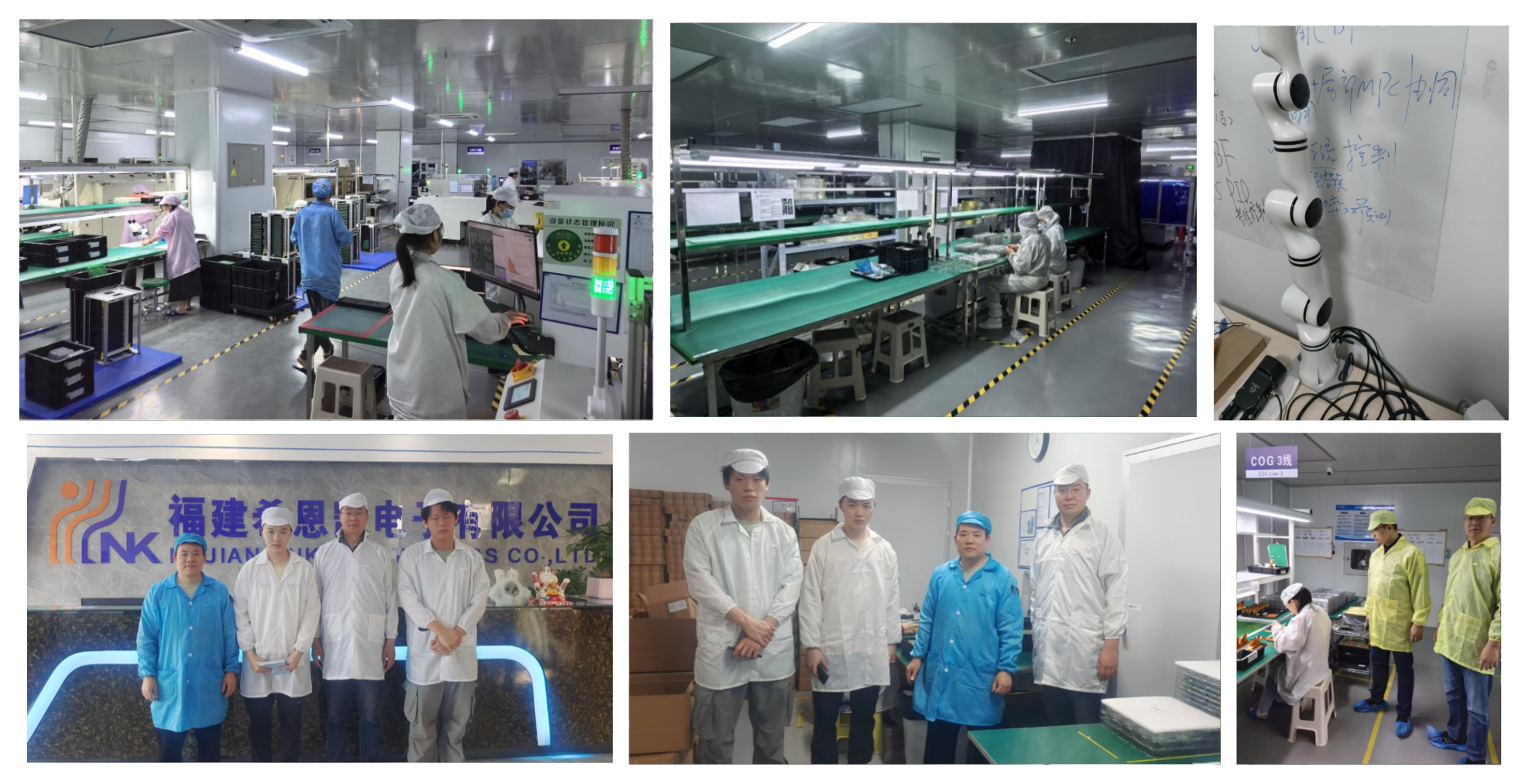
Under the Fujian provincial science-and-technology commissioner program, this engagement serves Fujian Xi'enkai Electronics Co., Ltd., addressing SME needs for line digitalization and quality upgrades. On site, the team mapped quality risks and tact bottlenecks from incoming material through finishing for high-volume display modules with diverse defects and strict cosmetic requirements, and designed one coordinated chain—defect detection, NG sorting, precise positioning, and finished-goods labeling—to replace slow, subjective manual inspection and loosely coupled rejection and marking steps. Working with process and equipment staff, trace fields, reinspection rules, and exception paths were aligned while vision, motion control, and line actuators were integrated so inspection results drive sorting and labeling, tightening per-unit tact and reducing missed and false calls, with reusable host software and commissioning methods for later ramp-up, role standardization, and data retention—demonstrating how university commissioner teams connect to industry and land advanced manufacturing in representative SME settings.
- For slow manual inspection and weak sort/label coupling on display-module lines, integrated defect detection, intelligent sorting, placement, and auto labeling in one station with camera/lighting layout, capture standards, trace-field alignment, and clear automation boundaries and acceptance metrics.
- For strict vision-to-motion consistency in robotic labeling, completed hand–eye calibration, ROI extraction, frame transforms, and trajectory/grasp tuning to improve repeatability and tact with far less manual reinspection.
- For operators who cannot touch PLCs directly, built a PyQt industrial host with defect display, process parameters, status monitoring, and exception logs to shorten downtime diagnosis.
- Assisted integration of detection, motion, and labeling into one closed loop through project delivery; the station achieved automatic labeling and intelligent sorting.
Stack
Python, PyQt, Industrial cameras, PLC-facing APIs